
Snapchat+ Explained: Price, Features and Limits.
Snapchat+ is a subscription that adds premium access and personalization to the app. Snapchat Plus members get exclusive perk options that change how your profile looks. You also get experimental features that may shift over time. Most extras stay optional, so you can keep your usual setup.
Price depends on your country and plan length, like monthly or yearly billing. The subscription does not remove ads everywhere, and it will not boost reach. Some tools have limits that change with app updates. Always check the in app page before you subscribe.
Price, limits, and what Snapchat+ actually changes
Snapchat+ mainly adds a unique profile feel, not a new social network. It lets you pin a best friend, customize icons, and access select analytics. It also unlocks private feature perks for people who like settings control. These perks can rotate, so features may come and go.
Limits matter if you expect major visibility gains. The subscription will not force someone into your best friends list. It also cannot lock in a ranking that changes with your chats. Think of it as extra tools, not a shortcut.
Who should subscribe in 2026
Subscribe if you use the app daily and like small upgrades. It fits creators who track views and people who enjoy customization. It also fits users who want private view options for certain social cues. If you like early access tests, it may feel worth it.
Skip it if you hate comparison features or feel pressure from rankings. Some users report anxiety when they watch friend status shift. If you only Snap a few times a week, you may not notice value. You can still use core messaging without paying.
Snapchat Friend Solar System: Planets and ranking guide
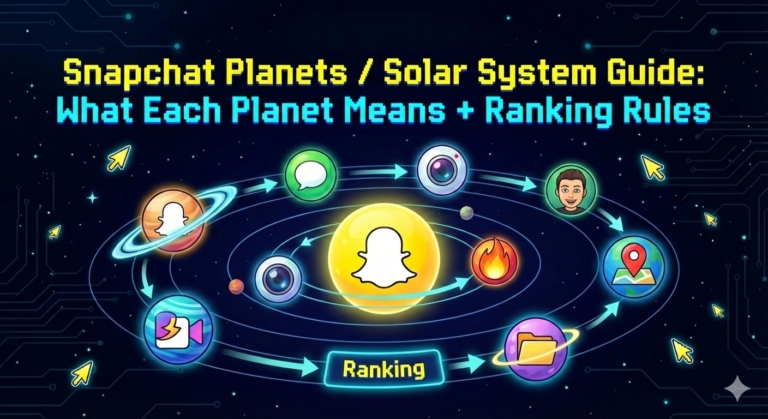
What is the Friend Solar System on Snapchat? It is a Snapchat+ feature that turns your friendship into a solar system replica. You act as the Sun, and your friend shows as a planet. The planet represents ranking inside a best friends style list.
Snapchat Friend Solar System and planet order explained starts with one key idea. The system uses dynamic updates based on interaction. That includes messages, snaps, and chats over time. Your spot can change fast, which creates dynamic ranking and dynamic change.
How Does Snapchat Solar System Work
The snapchat solar system looks at interaction frequency and recent activity patterns. Daily snaps and chat frequency usually raise closeness faster. Snap streaks can help, but they are not the only signal. The system aims to reflect real contact, not just one day spikes.
It works around a top eight view, not an endless leaderboard. You do not get a full list of every friend. You only see your position in that one friendship view. That is why many call it a private ranking.
Snapchat Planets Order and Meaning Explained
Snapchat Planets in Order (Mercury to Neptune) follow the solar system order. Snapchat planets order explained maps closeness to distance from the Sun. Mercury number one means closest friend in that set. Venus second, Earth third, Mars fourth, Jupiter fifth, Saturn sixth, Uranus seventh, Neptune eighth.
Snapchat planets order, meaning, and how to see your rank depends on your activity. A closest friend can change after a week of heavy chatting. Occasional interaction may push you outward to a distant planet. Rare interaction can drop you off the visible set.
What Do the Badges Mean?
Badges explain whether the ranking is mutual or one sided. You may see a Best Friends badge when you both sit in each other’s top eight. You may see a Friends badge when only one side ranks the other. Some screens show a gold badge or gold outline to highlight status.
Tap badge actions matter for the reveal. Tap reveal planet opens the planet position screen with Bitmoji placement. The Bitmoji sits on or near the planet to show closeness. This view stays private view only, so others do not see it.
Hearts, rings, stars, and color cues
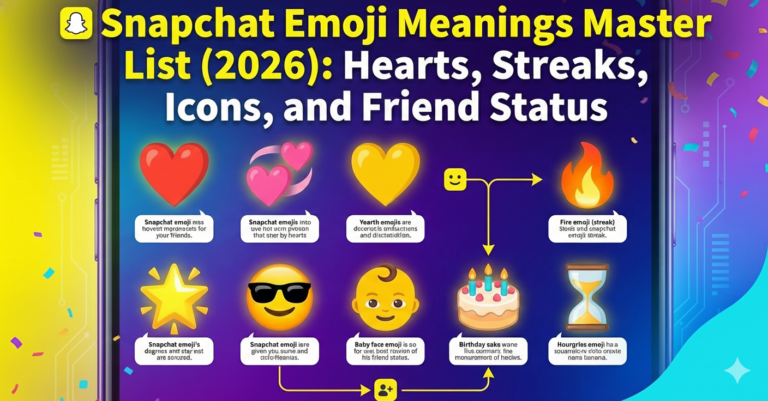
The Solar System screen can include hearts and stars as extra signals. You might notice yellow hearts, red hearts, pink hearts, blue hearts, or purple hearts. Some themes show colorful hearts or even purple blue hearts. These are visual cues, not a strict scoring chart.
You may also see a ring, gold ring, or stars around a planet. Some designs show orange stripes or reddish orange stripes on certain planets. A moon can appear with moon stars in some layouts. Stars decrease or change when your interaction shifts.
How to turn on the Solar System feature
How to enable Snapchat planets starts in your Snapchat+ settings. Tap your profile icon, then open the Snapchat+ page. Find the enable toggle for the Solar System option. New subscribers often find it off by default, so you may need to enable manually.
After you toggle on, open a friend profile to test it. Go to the friendship profile section under their name. Look for the Best Friends badge or Friends badge area. If you see it, tap to reveal your planet.
See your friendship profile on a friend’s Solar System
See your friendship profile on a friend’s Solar System by opening that friend’s profile page. You will only see your own position, not everyone else. This keeps it a private feature, even though it shows a rank. It can still feel intense, so use it with care.
Mutual friends do not control the result, but mutual best friends status changes what you see. You might sit in their mutual top eight, or you might not. One way ranking can happen when you message more than they do. That is normal, and it does not prove they dislike you.
Why Snapchat Planets Might Not Appear for You?
Why Snapchat planets might not appear for you usually comes down to access or status. You may not have the subscription active. You may not be best friends or even in their top eight. Low interaction can also keep the badge from showing.
Technical issues also happen. An outdated version can hide newer screens. Cache issues can block icons from loading right. Update the app, clear cache, then reopen it. If problems stay, reinstall app and log in again.
The Psychology Behind the Solar System Feature
The Psychology Behind the Solar System feature ties to gamification and social comparison. It turns friendship dynamics into a simple visual reward loop. Exclusivity also plays a role because it sits behind a subscription. That mix can act as an engagement driver.
Criticism often focuses on anxiety and rank chasing. Some people check planets too often and feel worse. If you feel that pull, turn the feature off or ignore the badge. Use the tool for fun insight, not as a relationship test.